The Revenant is a visceral ode to the western frontier of the 1800s.
The story is simple. The setting expansive. And the characters grandiose in the most transparent of ways.
Perhaps the most striking thing about The Revenant is not the characters themselves, but the hyperawareness of the camera.
With multiple close up shots that feel as though one is trespassing, you are up front to the action from the start. Rigid tracking shots, most in one continuous sequence, follow the cast of characters through rugged terrain.
It feels voyeuristic. It feels immense. The audience is submerged in a disorienting frenzy long enough to forget one is watching a film until blood is splattered onto the camera.
You are a mere spectator, then, to cinematic art - one eye glance away from breaking the fourth wall.
It's a genius ploy to bait the audience for you are involved and yet far removed.
The Revenant is visually breathtaking. Wide shots explore the vast details of the films settings and it looks like a stunning oil painting.
But the story is as old as time.
Hugh Glass (Leonardo DiCaprio) seeks revenge after being left for dead by his own hunting team.
He is on the brink of death, and yet, fights his way back through rough patches of nature to survive and exact retribution.
As formidable as DiCaprio is, and he is, one cannot forgo a mention of Tom Hardy.
Hardy is the only actor that could impressively be DiCaprio's antagonist. Harsh. Jagged. Heartless. Bold. Hardy plays the character of Fitzgerald with desperate coolness. It is beautiful to watch.
If we learn anything from the film, through a feminist perspective, it is that of the harsh reality of manhood: in the western front, you either kill or be killed. There is no room for compassion. Boys lose their humanity and grow callous as the snow. Survival, for a man with a heart, means to lose it. He is to walk alone among the company.
If you have yet to see The Revenant, I would recommend it, though I warn the viewer, the action is mostly through character performances and camera angles. We are used to seeing films in the style of Michael Bay, where explosions take place for artistic integrity. Fast pace and constant movement of scenes that suffocate the films with too much plot is distant in The Revenant.
So it might appear too slow. You might feel impatient for you are not used to it, but watch all the way through and immerse yourself in the film. It is worth it.
Showing posts with label film review. Show all posts
Showing posts with label film review. Show all posts
Wednesday, April 27, 2016

Saturday, February 14, 2015
Kingsman: The Secret Service film review
Kingsman is an outrageously sophisticated action film tailored for those who have affinity for the James Bond films. It is a joyride that borders on the ridiculous, and Colin Firth is impeccable as the well suited espionage Kingsman, Harry Hart.
With a comedic twist to the Bond like villain, philanthropist Valentine, played by the always sexy motherfucker, Samuel L. Jackson, hatches a nefarious plot to population control, and plans to use technological advancements against humanity, the Kingsman must not only train new spies, but stop Valentine before it is too late.
Watching the film in Dbox (a motion sensor seat that vibrates like a roller coaster) the experience of the action scene were intensified. If you can afford and can handle motion seats I would recommend Dbox. There was a particularly visceral and cerebral church scene that played out like a video game, and which was the highlight of the film as a whole.
 My only complaint about the film transpires in the third act, when the main character, Eggsy - played by newcomer Taron Egerton - is propositioned by a captured princess to be saved. She tells him if he saves her she would be willing to let him fuck her in the ass.
My issue here is the exaggeration of both gender expression. First, a woman who feels compelled to offer sex in exchange for safety, and second, a young man is, as is often the case in films like these, rewarded with sex to saving a woman.
The fact that it is also not just sex, but anal sex propels this story into a taboo space of sexuality displayed in film. One thing must be known, the MPAA rating system is completely flawed. Male sexual expression - including anal sex that adds absolutely nothing to the plot of the film - is in most cases given a R rating, but when when a film shows a woman enjoying sexual pleasure that is imperative to the film's plot, it is almost always given an NC-17.
It irked me that I was able to enjoy the Kingsman up until the very end. I was sorely disappointed that once again, a gratuitous scene that does nothing, but create another patriarchal distortion on a decent film, was added in when it didn't need it. There is nothing new or fresh about using a female's body to appeal to a young boy's imposed libido. I hate it, and find it disgusting that films continue to write the scripts that young adults use to navigate through relationships.
However, having said that, Kingsman was still fun, and I really appreciated the female assassin named Gazzelle, who had weaponized prosthetic legs. She was fierce and strong, and completely fun to watch. Kingsman is probably the lesser of evils given some disturbing films like Fifty Shades of Grey and The boy Next Door, are in theaters as well.
With a comedic twist to the Bond like villain, philanthropist Valentine, played by the always sexy motherfucker, Samuel L. Jackson, hatches a nefarious plot to population control, and plans to use technological advancements against humanity, the Kingsman must not only train new spies, but stop Valentine before it is too late.
Watching the film in Dbox (a motion sensor seat that vibrates like a roller coaster) the experience of the action scene were intensified. If you can afford and can handle motion seats I would recommend Dbox. There was a particularly visceral and cerebral church scene that played out like a video game, and which was the highlight of the film as a whole.
My issue here is the exaggeration of both gender expression. First, a woman who feels compelled to offer sex in exchange for safety, and second, a young man is, as is often the case in films like these, rewarded with sex to saving a woman.
The fact that it is also not just sex, but anal sex propels this story into a taboo space of sexuality displayed in film. One thing must be known, the MPAA rating system is completely flawed. Male sexual expression - including anal sex that adds absolutely nothing to the plot of the film - is in most cases given a R rating, but when when a film shows a woman enjoying sexual pleasure that is imperative to the film's plot, it is almost always given an NC-17.
It irked me that I was able to enjoy the Kingsman up until the very end. I was sorely disappointed that once again, a gratuitous scene that does nothing, but create another patriarchal distortion on a decent film, was added in when it didn't need it. There is nothing new or fresh about using a female's body to appeal to a young boy's imposed libido. I hate it, and find it disgusting that films continue to write the scripts that young adults use to navigate through relationships.
However, having said that, Kingsman was still fun, and I really appreciated the female assassin named Gazzelle, who had weaponized prosthetic legs. She was fierce and strong, and completely fun to watch. Kingsman is probably the lesser of evils given some disturbing films like Fifty Shades of Grey and The boy Next Door, are in theaters as well.
Friday, November 14, 2014
Maniac Film Review: Frodo Gone Psycho
 |
| Elijah Wood is a Maniac |
First and foremost, this is an impressive performance by
Elijah Wood. Second, what makes Maniac a
unique film is the smart use of cinematography.
The majority of the film is shot from the point of view (POV) of Frank’s
(Elijah Wood) eyes. We see what he sees
and we partake in what he partakes. We
only ever get a glimpse of him by reflective surfaces; mirrors or glass and
even televisions. I counted maybe three
or four times when the camera steps out of Frank’s POV, which I interpreted as
giving the audience a breathing room to process, just for a moment, the chaos
that is the maniac.
Making the choice to shoot the film in Frank’s perspective
not only puts the audience in the same shoes as a serial killer, but actively
seeks to engage the viewer on a deeply personal level. In most horror films the viewer is always a
third party observer. We are far removed
from really feeling the brutal carnage enacted by the killer(s). Making us one with the killer is an anxiety
inducing thrill that is hard to come by in cinema, and that impressed me.
From the title we can surmise that the protagonist, Frank is
mentally disturbed. And indeed, I was looking
for a specific illness that would illuminate his behavior, but what I
discovered to be the true root of his murderous impulse is a psychological
hatred for women. It would be easy to
categorize this statement as an isolated incident, and that Frank’s violent actions
are a neurological imbalance of his genetic makeup. It certainly can be argued that his
pathology is separated from society as a whole, but his criminal animosity is
more common and prevalent than we think.
I believe his influence was nurtured and conditioned by his environment:
A deeply misogynistic and toxic patriarchal society.
As is customary in filmmaking these days, a male protagonist
is not propelled into motion until he is triggered by the death of a prominent
female figure in his life. In Frank’s
case, his rage is released when his mother dies. Though we never witness her death, and nor do
we know the exact manner in which she had died, flashbacks to Frank’s childhood
indicate a complicated and often times inappropriate behavior.
Hiding in a closet, Frank is made privy to his mother’s
sexual prowess with multiple men. This also includes her drug use. Though bearing witness to his mother’s less
than ideal savior-faire attitude toward parenting does not turn a child into a
serial killer, it does explain the Oedipus complex he later develops that
becomes the foundation to his killing.
If his mother’s hypersexualized behavior affected Frank in a
deeply psychological manner, then the patriarchal and misogynistic attitude of
society further embedded the disgust and contempt of the female body, which
served as a trigger for the violence he perpetrated.
His obsession with mannequins also gives insight to how he
views his kills. To transfer his
projections of the women onto inanimate objects, his desire is to manipulate
and exert a sense of control. He turns
the women into mannequins in the same way an art collector buys auctioned
paintings: to have possession. They are
no real to him until he has killed and scalped them and placed them rightfully
in his collection.
But perhaps, in a startling scene, Frank’s violence toward
women is best depicted in his own deteriorating view of himself. Looking in the mirror, Frank is horrified to
see his genitalia has been replaced by the ambiguous bottom half of a
mannequin. It’s a scene that has strong
indication of his presumed sexual impotence.
His sexual release does not come
unless he is inflicting brutal violence toward the women he stalks.
As I said before, it is easy to write Frank’s behavior off
as an individualized pathology completely dissociated from society, but what
this film underlines is that in defining rigid forms of masculinity within the
vortex of gender binary, and making sexual promiscuity an imperative aspect of
manhood, the system of patriarchy distinguishes as it condones male violence as
virtuous traits that often carve a path to violence.
There is a depth of sociological understanding that goes
beyond this review, but as far as the film is concerned, the level of performance
and gore is unlike I have seen. I
recommend this Netflix pick for those interested in horror films that are not
campy or cheesy. This film is also not
for the faint of heart. Enjoy.
Tuesday, November 11, 2014
Charlie Countryman Film Review

Charlie Countryman is a thriller romance that takes place in
Bucharest, Romania. It follows a young
man, as the title suggests, by the name of Charlie Countryman (Shia LaBeouf) on
his path to self discovery. However,
what he finds is love amid peril business of Romanian gangster.
After the death of his mother – an overused an tiresome plot
device in every damn male lead film – he flies to Bucharest and finds his path
cross with a chic Romanian cellist, Gabi (Evan Rachel Wood). Unbeknownst to him, Gabi – an artist with a complex
history – is married, but separated from a well known ruffian named Nigel (Mads
Mikkelsen).
The construction of Charlie’s masculinity was in complete
contrast to all the other male characters for much of the film. Nigel and the other Romanian gangster, Darko,
both adhere to a hegemonic masculine bravado that encompasses traits of
obsession, violence, sociopath, possessiveness, and controlling behavior.
The two hostel roommates Charlie bunk with environ their
masculinity with sexual prowess and drug use, but Charlie, though not immune to
male pomposity, was poised with kindness and compassion and a dash of honesty
we rarely see in male characters. In
many ways he is the opposite of the hyper masculine men he is surrounded
by.
Though the film is mostly in the perspective of Charlie, his
love interest Gabi has a far more compelling story, and I would have preferred
to have seen the film from her perspective.
I would have loved to see her fight to escape her plight with Nigel
rather her fall in love with Charlie. Despite her obvious talent as an orchestrate
cellist, Gabi is always in the possession of the men in her life. Her father, her husband, and now the object
of Charlie’s affections; the expansion of her story would have been ideal, but
her identity was built around the violent backdrop of her unfortunate
circumstance with Nigel and Charlie.
In spite of my desire for a change in story line, I found the
film to be endearing and charming enough to enjoy it. It was well constructed with just the right
pace. The ending was slightly flat given
the improbable way Nigel dies – uncharacteristic and out of place – but overall
an entertaining Netflix choice.
Anna Film Review

Anna is a psychological thriller that uses the femme fatale
trope as a tool for manipulation. The film
first opens to a brief description of a memory detective named John (Mark
Strong). As is common with every other
film led by a male, his story doesn't begin until the death of prominent figure
– in his case his wife. As he is
propelled into motion, one wonders why the film is titled Anna when the film is
mostly from his perspective.
I was hoping, from the title, there would be a complex
female character that could illuminate on mental illness, but in reality Anna’s
(Taissa Farmiga) characterization tethers back and forth between victim of
abuse and a manipulative, sociopathic teenager constructed as a “seductress.”
I was initially excited over the more sci fi aspect of a
memory detective ala minority report, but the film fell short as it tried to
also color the characters with a fatal attraction trope. The idea that a female is using her “feminine
charms” to tempt a man – older than she – to hatch an elaborate escape plan is
a tired twist.
Further, the film tries to explain – rather weakly – Anna’s
mental instability by showing John googling “teenage aggressiveness and sexual
seduction.” As if Anna is – as a female –
not allowed to own her body without it being hypersexualized by patriarchal conditioning.
The film, in its attempt to force a twist, exploits Anna’s
femininity while making her a secondary, supporting character. John is essentially the lead that is depicted
being conned. The story is more about
his journey of unintended self discovery than it is about Anna’s extreme form
of survival.
What is dangerous about this perspective of overt
sexualization of teenage girls and even adult women, in narrative plots, is the
use of their bodies as weapons. When weaponizing
female bodies’, violence towards them is easily justified because women become
commodified objects to be dominated. The
female body is then seen as a territory to be colonized and conquered.
The point I am trying to make is goes beyond the film
itself, but the film helps facilitate the fact that our society fears the
female body so much that it makes it the prime villain in a world where men are
considered the heroes.
I do not recommend this film, though it is available on
Starz on demand if you have ixfinity.
Friday, November 7, 2014
Sleeping Beauty Review: Not your Disney Version
 |
| Emily Browning as the "Sleeping Beauty" |
Sleeping Beauty, the 2011 Australian drama, is a provocative
film that explores gender, class, and sexuality in a unique narrative. Lucy is a struggling college student
attempting to make ends meet. Like most
college students, Lucy has multiple jobs.
However, minimum wa
ge is not enough to make rent so she capitalizes on
her body by exchanging sex for money. What
makes this film unique is the company she involves herself in. Answering an ad in the paper, Lucy is hired
to cater exclusive and elite dinner parties….in her lingerie. My first reaction: is this what rich people
do with their time and money? As someone
who has never had much money it baffles my mind when excess waste is done by
the rich. But the more pressing matter
is that of female agency and male domination.
First, “Sleeping Beauty” is not just a title, but a metaphor
for female passivity. The world, at
large, expects women to adhere to certain, universally accepted,
stereotypes. Such stereotypes include a
demur, soft-spoken, “good girl” behavior.
Historically, women’s bodies have always been considered property. Even after society, in shifting their mindset
to adapt to changing times, accepting a woman as her own person not only
disrupted, but threatened the status quo.
What the film shows is, regardless of milestone victories that favored
women, their bodies have always been, and continue to be lucrative
commodities.
Selling sex, whether legal or illegal, is a billion dollar
business that perpetuates what Naomi Wolfe calls “The Beauty Myth.” A woman’s value in society, today, is
reflected in the value of her looks. A
youthful body of a woman becomes the property of society, and by default the
property of men. But this type of
property value is driven by capitalism.
Money is imperative to survival and Lucy does what she can, in her
circumstance, to survive. One way she
does is become a “Sleeping Beauty.” She
gets paid, in freelance opportunity, to go under a sedated state while wealthy
clients pay to spend the night with her.
A precept explained by the madam to each punter (there are three in
total during the film. All of whom are
in old age) states a no penetration policy.
My fascination with this kind of business is not the selling
of sex, but that in the desired motionless acquiescence of the female
body. Lucy’s full participation is not
needed or even required for the punters.
Though there is no penetration allowed, the close, intimate touching of
Lucy’s body indicates a sense of control and domination exerted over the female
body. Even her name change – Sara – is a strong indication that her identity is
not her own regardless of her involvement, and that she must be stripped, both figuratively
and literally, of her personhood. This brings me to my second point: total
masculine supremacy as the ultimate appeal.
The first punter, before he begins his session, looks to the
madam and explains a long, drawn out story – bordering on drivel – how he did
very little to cherish the things in his life.
I was looking for a philosophical meaning for his choice, but what I
found in his gibberish is a mindless justification for his eccentric
payment. The camera focused on the old
man as he broke the fourth wall to center his attention directly at the
audience. I suspect this was done so
that we could empathize with him, but it induced nothing in me that had me
convinced the circumstances involved were justified. However, the madam tells him, “You are safe
here. There is no shame here. No one can see you.” This is done to validate the old man’s
choice.
The madam, in her own words, gives permission for the old
man to take ownership of the “Sleeping Beauty.”
In doing so, the madam invites the audience to do the same, as if the
masculinity of the audience also hinges on this archaic notion of
domination. I find the fact a woman –
the madam – condoning the violation of another woman, compelling. It is as if she, speaking for all women, is
pardoning the sexual prowess of these older men that with their wealth and privilege
buy back their manhood when they buy time with an immobile female body.
The third punter attempts to lift Lucy in his arms as if he
is carrying her over a threshold. I
interpret this as his attempt to prove his masculine worth. His manhood hinges on his ability to show
strength. Yet, it becomes clear, as he
drops Lucy to the floor he is not the same man as he was in his youth, and thus
failing to confirm his machismo nobility.
Nothing more is shown of him.
The second punter, which I kept for last, is a fascinating,
but scary subject. His expression of
masculinity is more aggressive and violent.
His verbally abusive tone suggests a type of domination that is more
pervasive and common in society. Men
like the third punter desperately try to hold on to their power and sexual aptitude,
especially as they age, by exerting brutal and savage behaviors. In his scene the third punter not only burns
Lucy with a cigarette – something that is against the rules – but since he is
not allowed to penetrate her vaginally or anally, he violates her by inserting
his fingers in her mouth as he calls her a slew of pejorative words. Lucy is no longer a “Sleeping Beauty” but an
object of this man’s verbal and physical abuse, and she is unable to
participate or consent as most sex workers might be able to.
Filmmakers tries to push the envelope when it comes to
blurring the lines between sexual pleasure and rape, and or what constitutes as
sex work, but it is safe to say that the lack of consent of the “Sleeping
Beauty,” despite pursuing this unorthodox job herself, she is nothing more than
a vessel for patriarchal entitlement. The film, itself, is worth the watch; its slow
pace and drawn out shots linger to give the audience a sense of Lucy’s slow
progression as she navigates through her journey. I enjoyed the film, and suggest it as one of
my Netflix picks.
Tuesday, November 4, 2014
John Wick Film Review: The Flame that is Keanu Reeves
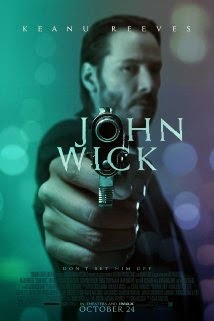 |
| John Wick: Don't Set him Off |
It seems that in almost all films with male leads,
particularly revenge stories, the male is always motivated to tap into his
carnal, violent side, which is prompted by the death (or murder as my previous
review on Horns indicated) of his significant other – almost always a
woman. In the case of John Wick, his
wife has barely a few minutes of screen time before she is killed off,
presumably by a longtime battle with a disease.
Helen (Bridget Moynahan), before her death is assumed to have arranged a
gift for her widowed husband. Posthumously,
John receives a puppy from his late wife that he aptly named Daisy.
Daisy is a clever plot device that represents the presence
of his wife without having a woman on screen.
When John has a tiff with a couple of Russians outside a gas station,
they decide, boldly and naïvely to “set him off.” Lead by Iosef Tarasov (Alfie Allen) the son
of Russian mobster, Viggo -the Russian version of the most interesting man in the world (Michael Nyquist), they enter his home, kill his dog, and steal his
car. Inept Iosef – a boy trying to fill
a man’s shoes – has no idea he just awakened the beast. Keanu Reeves never looked better in black
then he does in this film; draped in form fitting suits that fasten like armor,
John Wick inflames the whole assassin community in search of his revenge.
The film plays out like a video game with no hesitation to
the violence enacted. The body count
rises at each turn of the corner with no remorse. One cannot help but wonder, with violence
such as this often normalized is masculinity constructed to accept male
aggression as innate? John Wick shows
very little compassion and even less emotion – an expected trait in assassin
films. But while this style of storytelling
is compelling to watch on screen the fact that there is an expectation in our society,
for males to express a detachment of humanity is frightening.
As much as I enjoyed watching Keanu Reeves take down the
villains with blatant disregard, the image of male power encased in violent
acts defines masculinity with a sense of brutality, bloodshed and a
destructiveness that has little room for anything else. The film seems, on the surface, simple
enough, but liberation from gender roles is not just for women. Men desperately need to learn how to
deconstruct the rigid stereotypes in order to navigate in healthy ways not just
with women, but with other men too.
Most action and thriller films are heavily violent, but most
of that violence is male against male. We
don’t think twice about the consequences as being socially deadly, but when the
patriarchal system we live in condones bestial clashes between men, and defines
them as a normal part of manhood, we inadvertently create an unsafe environment
for people.
Overall, John Wick, the film, is decent as any action
film. It is superficially entertaining,
and deeply educational on a sociological perspective. John Wick, the man, is an anti-hero with very
few layers of complexities. Yet, you
root for him up until the end.
Monday, November 3, 2014
Horns Review: what I learned about female agency
 |
| Daniel Radcliffe as the horned, Parseltongue Diablo |
On the surface Horns appears to be a murder mystery with
heavy religious themes. Daniel Radcliffe
plays Ig Parrish, a sloppy, washed up townie looking to exonerate himself from
the death of his girlfriend Merrin (Juno Temple). In the middle of his predicament, Ig
unexplainably grows horns, which allow him, in a town that scourges his every
move, to be privy to the deepest and darkest of sins looming within each
character he comes into contact with.
The Horns are a personification of humanity’s true nature; a
devil mask that reveals what we want to see of others. The town views Ig as a devil for what they
believe he did to Merrin, but as the film progresses, confession after
confession the town-folk illuminate their own sins. Harboring their own demons, they give way to
gluttony, to vanity, to selfishness, to envy, and wrath and so on.
The film slips back and forth between the present and past
tense as Ig uses his horned abilities to ascertain the true details of Merrin’s
death. The film is fresh and original as
one can be as an adaptation of a novel.
The Diablo transformation is unique to an otherwise standard Hollywood creation,
playing with the same cliché tropes. Good
vs. Evil, female purity, and the ever tired plot device that requires the
female love interest to die in order to propel the story of the male
protagonist into motion.
However, there were two things that stood out the most; one,
the lack of personhood and agency afforded to the character development of
Merrin allowed for two, the possession of Merrin’s identity catered to male
entitlement in frightening and fatal ways.
The film, Horns, does not
actively seek to play on the real anxieties many women face in today’s culture,
but it contributes, as an example, of the strict and rigid expectations of
gender roles.
On the surface, Ig and Merrin’s relationship seems
ideal. Childhood sweethearts that appear
to have a impenetrable romance, but the toxicity of their relationship is not
from strange, uncharted territories, but in fact, from the prescribed gender
roles assigned. From the start Merrin is
pitted against another female character, Glenna Shepherd. The two have no on screen interaction, but
are, in juxtaposition, biblical opposites.
Merrin is the good virginal woman that all the main male characters vie
for while Glenna is reduced to the town slut.
That the two characters cannot coexist as separate and autonomous
entities without being boxed into the Madonna/whore complex is a major
problem. For too many reasons I cannot
write here, giving women equality would disrupt the status quo. Neither woman was allowed ownership of her
own body.
When Merrin decides to break up with Ig, her motivation is
that of self sacrifice. However, on the
surface, Merrin is believed to have acted on selfish impulse. But choosing not to disclose the true
reasoning leads Ig to wrongfully assume she was leaving him for another man,
which induces his jealousy. The surly behavior
Ig exhibits at the diner is curiously revealing. Ig is passionately stubborn about his
relationship, and it borders near obsession.
His whole life, since meeting as children, has centered on Merrin. He has no concept of an identity beyond their
romance. As his ire increase it becomes
apparent that he is more upset at losing his picturesque ideal that anything
else. That he was quick to accuse Merrin
of being unfaithful – a claim for which there is no evidence – suggests a sense
of ownership of her body. This is not
love.
Love, in the same regard, is also not what Lee (Max
Minghella) exhibits for Merrin. Though
he has been Ig’s best friend since they were all kids, he too has been
passionately stirred by his friendship with Merrin. Lee comes across as a well mannered, diligent
good guy, but in the later part of the film it becomes very clear that his
crush on his best friend’s girlfriend is not only unhealthy and obsessive, but
dangerous and fatal. What makes Lee
dangerous is his clean cut expression of masculinity. The film does its best to create suspects out
of everyone but Lee, which gives him a sense of privilege that society condones. Yet, Lee is a textbook sociopath that takes
advantage of his friendship with Merrin, and completely disregards her
personhood as well as her boundaries.
When Lee stumbles upon a distraught Merrin in the cold,
rainy night rather be a friend she could trust he makes a pass at her. Agitated by his brazen behavior, Merrin
defends herself by pushing him off. But,
years of obsessive love, built on this notion that Lee has always had possession
of Merrin by virtue of fixing her broken cross when they were kids, comes to a
boiling conclusion as he is denied access to her body. Fed up, Lee infringes upon years of
friendship, and savagely rapes her, forcing his claim of property, as that is
what she has now become, he then murders her viciously and violently.
Merrin’s death could be classified as a “crime of passion,”
but in truth this one act is not an isolated incident. Though only a film, adapted from a novel,
Horns reveals how toxic patriarchy really is.
In no place of the film does Merrin or her body belong to her. She becomes an extension of identity for each
male in the film. First it is her
father, he is over protective. Then it
is Ig; neither, from childhood to young adults, knows a life without each
other. Then, in her worst moment, Ig’s
brother makes an uncomfortable pass that prompts Merrin to abandon a possible
safe passage home for the darkness of the woods. And just when things couldn’t get worse, they
do. She believes she has found solace,
at last, when Lee finds her, but he is neither a friend nor a safe place to
rest.
After her murder, Ig discovers a letter she had written to
him. In it she finally reveals the truth
to why she broke up with him. She had
been stricken with the same kind of cancer that had killed her mother, but
rather tell him up front she complicates the situation, hoping it would be an
easier to push him out like a baby bird to fly on his own. Even when she is faced with the scariest thing
in her life she doesn’t belong to herself either. She belongs to the cancer in her body. And as the failings of hyper masculinity
engulf Merrin in violence, her own body traps her life a wounded animal shot in
a hunt. The only thing that remains of
her is the tree house, now turned into an effigy, and the scene of the crime,
which really belonged to Ig and Merrin both.
The reason I make a big deal about this lack of
characterization of Merrin is that our society rarely affords women the freedom
of personhood without attaching their entire identity to a man. It is most evidenced in film, though it may be
subtle at time. Further, the idea of females
as property creates a scary environment where men feel entitled to women’s
bodies. In recent years we have seen an
increase of violence against women in various forms. A teenage girl was stabbed to death after decliningan invitation to prom, a young man went on a killing spree after posting a
misogynistic rant on youtube, and most recently, female video-gamers have been receiving
a deluge of rape threats and mass shootings in what is being calledgamergate. Street harassment videos are
also highlighting the various experiences of women who just walk down the
street, which I need to add is a universal experience as this video from Egypt show.
The point to all of this is that while, the film Horns, on
its own, is a decent film with actors we can all love, it does serve a purpose
beyond the mise en scene. It can
illuminate as well as contribute to the stressful environment that women and
men face when navigating through a patriarchal society.
Wednesday, October 29, 2014
Odd Thomas Film Review: In Odd we Trust

For those looking for a more supernatural base that is more
witty and creative rather than eerie and spooky, Odd Thomas is a well done fun
ride. The twist is easy to spot, but it
won’t matter because the heart of the film centers on the Protagonist, Odd, (yes,
that is his name, and yes he’ll make a point to tell you) and his girlfriend Stormy.
Odd is, much like his name suggests a nontraditional hero. Unlike the super souped up crime fighters of the superhero universe, his strength is more intuitive and less muscle mass, and his supernatural ability to see dead people provides him a sense of vigilante action that will allow him the chance to save the little California town he lives in.
The film immediately springs into action and is not conservative about taking its time with slow dialogue. It usually takes ten minutes of screen time to set up universe of a film, but with some quick step the filmmakers of Odd Thomas were able to clue the audience in with just three minutes before the first inciting incident. It is a heartfelt and emotional film that has the ability to captivate the senses.
Based on a mystery thriller novel by Dean Koontz, Odd Thomas
is a fun Halloween film that follows a young man as he plays “detective to dead
people,” the way he puts it. The
supernatural clairvoyant is everything I wish the kid from the sixth sense grew
up to be. Anton Yelchin is strong and powerful and poignant in his performance. There is no much to say about the film other
than it is another Netflix pick for some Halloween fun.
Contracted Film Review: My Netflix Pick

At first glance Contracted seems like a cautionary tale
about the dangers of sexually transmitted diseases. It is not.
The ostensible twist does not come until the end, but to start the film,
it opens to a medical examiner raping a dead corpse. Already the visceral senses are made
uncomfortable, and you question if this is just another gratuitous and unnecessary
shot for shock value. I say this because
the film makes no attempt to disclose any first person account as to who this
man is beyond that opening scene.
He remains faceless even when he meets the female protagonist, Samantha, who is left inebriated at a friend’s party. It isn’t a stretch of the imagination when the unknown male rapes Samantha, and in a fait accompli, sets in motion the next three harrowing days of this woman’s life. We are lead to believe that whatever this woman contracted it was this blurred figure that passed it along, making her patient zero.
He remains faceless even when he meets the female protagonist, Samantha, who is left inebriated at a friend’s party. It isn’t a stretch of the imagination when the unknown male rapes Samantha, and in a fait accompli, sets in motion the next three harrowing days of this woman’s life. We are lead to believe that whatever this woman contracted it was this blurred figure that passed it along, making her patient zero.
Scary Halloween films usually consists of creepy monsters, evil,
sadistic, often supernatural psychopaths on a murder spree, and a lot of melodramatic
acting. What makes Contracted scary is
the opposite. While it is possible to
outrun a murderer, even a supernatural one, one cannot outrun the failings of
the body. The virus, still unknown to
Samantha, takes on a physical toll.
There is copious blood loss, teeth following out, nails coming off, and
the occasional slew of maggots dripping out of the vagina. The fear is heightened by the unidentifiable
decent into a maddening disease that which has no name. It is not a demon that can be exercised. It is not a masked madman that can be
killed. It has no face, but the one that
belongs to Samantha.
With no scientific explanation to hold the weight it is up to the film’s lead actress to give a convincing performance of a fractious mind deteriorating in physical form. Navigating through an already complicated life, Samantha, played assuredly by Najarra Townsend, starts to lose everything she loves.
With no scientific explanation to hold the weight it is up to the film’s lead actress to give a convincing performance of a fractious mind deteriorating in physical form. Navigating through an already complicated life, Samantha, played assuredly by Najarra Townsend, starts to lose everything she loves.
What I disliked, though I cannot hold against the film, is
that Samantha’s sexual orientation was vilified by her ex lover, Nikki. The film does not make it clear if she is a
lesbian or a bisexual, but what is clear is that sexual relations with men
makes a woman contaminated and repulsive, as a scene between Samantha and Nikki
fighting implies. It is an unfair
assessment, but one I find that occurs within the LGBTQA community. Take the words of out bisexual Megan Fox –
when stating her bisexuality she said she would not date a bisexual woman
because “that means they also sleep with men, and men are so dirty that I’d
never want to sleep with a girl who had slept with a man.”
With this quote in mind, perhaps what became an unintended
theme of the film centers on the female body; the virus inflicted on Samantha
becomes a personification of the loss of agency and personhood. And succumbing to the virus is a more deeply
frightening personification of living under a toxic form of patriarchy. Samantha’s sexuality is used against her as
punishment not just in being raped by a man, discriminated by her female lover,
but that she is, by default, a virus too.
In any case, Contracted is a fascinating, but narrow perspective of a
subgenre of a genre. I recommend this as
my Netflix pick for horror films to watch on Halloween.
Thursday, October 16, 2014
The Boxtrolls: Better Parents than Actual Humans
 |
| The Boxtrolls: Eggs, Winnie and Fish |
The Boxtrolls is a stop motion animation film for children
with surprising adult themes.
Parenting is not an easy venture, but in the film the contrast between two
different worlds is a fascinating axiomatic observation. Juxtaposed on screen are the merger of an
aristocratic society and the gutterpups of the underground – the boxtrolls. In a tangible, contiguous glimpse, the film
brings two worlds together to shows us the variation in environmental
development of childhood.
Winnie, the town council’s daughter, and Eggs, the boxtroll
child are raised in extreme difference.
Winnie has everything money can buy; she is well fed and living in a
palatial home. All things are given to
her in ways the less fortunate can only dream of. Yet, she is missing the most valued and
cherished thing a child needs: Parental guidance and love.
Love is what the boxtrolls encase Eggs in.
Despite living in the catacombs of the underground they have made a home
with a mélange of items that fills the usually damp place with familial warmth. They provide Eggs with the attention he
requires and allow him the agency to discover the ability of creation in
artistic ways from materials the above ground society calls garbage. In many ways Eggs is raised as an equal to
the boxtrolls. They love him enough to nurture
him as a living being, in doing so he sees the world in a soft, good natured
way. He sees beyond the so-called
monstrosity the town labels the boxtrolls in a caveat of annual
entertainment.
For Winnie, the opulence she is privileged with leaves her in unloved isolation. She acts out in obstreperous rebellion to garner the attention of her absentminded father, and unlike Eggs, is treated as an inferior being that is not only incessantly talked down to, but neglected as well. Her father is too busy being an ostentatious, cheese loving blueblood to notice her pleading behavior.
With no parental guidance, Winnie learns to adopt the ferociously prejudiced thinking of the town. When she meets Eggs she spews, in non sequitur haste, what the town believes to be true of the boxtrolls, but as the notion is proved false, the shift in the story reveals to Winnie what the audience already knows. The real monsters that prey on the fear of others are adult humans.
For Winnie, the opulence she is privileged with leaves her in unloved isolation. She acts out in obstreperous rebellion to garner the attention of her absentminded father, and unlike Eggs, is treated as an inferior being that is not only incessantly talked down to, but neglected as well. Her father is too busy being an ostentatious, cheese loving blueblood to notice her pleading behavior.
With no parental guidance, Winnie learns to adopt the ferociously prejudiced thinking of the town. When she meets Eggs she spews, in non sequitur haste, what the town believes to be true of the boxtrolls, but as the notion is proved false, the shift in the story reveals to Winnie what the audience already knows. The real monsters that prey on the fear of others are adult humans.
There are different ways to interpret the film, but one
thing is quite clear. The boxtrolls are
lovable creatures with a childlike sensibility; each one unique in style and
personality. Children of all ages will
love this film as well as any adult.
Stop motion animation is always a wonderful treat to enjoy given the
painstaking time each movement costs, and so with that I say, while the film
does not pass the bechdel test, it is still worth a watch or two.
Monday, October 13, 2014
The Maze Runner: Where are you running to?
 Disclaimer: This review is based on the film, and not influenced
by the Maze Runner series.
Disclaimer: This review is based on the film, and not influenced
by the Maze Runner series.
My first question, upon viewing the Maze Runner, is why a
group of scientists would create a maze, where seemingly healthy males, in a
very Lord of the Flies existence, could be studied for a cure to a virus that
appears to have no cure, especially if an antidote already exists for whatever infliction
is caught in the maze.
Further, if the idea was to inject the boys with the virus, and see which develops immunity, it does not explain the need for a maze – in many ways it sounds counterproductive. But perhaps these are questions best answered in the books.
Further, if the idea was to inject the boys with the virus, and see which develops immunity, it does not explain the need for a maze – in many ways it sounds counterproductive. But perhaps these are questions best answered in the books.
In a more existential manner, the maze – as a metaphor –
represents the birth of social hierarchy in a patriarchal form. With a clean slate, a group of just boys are selected
and introduced to a “survivor-esque” situation, which they dub the glade. They build forts, a farm, and create rules to
follow. Within this glade, and amid the
confusion of their plight, the boys build a society that becomes their safety
net.
Which is why, Living for years in an all male society, the boys are dumbfounded that a lone female – Teresa – is the last person brought up to the glade. Did the scientist run out of male bodied persons or was Teresa part of their show? Regardless, how did they think the virus would affect a male body versus a female body given that the whole planet is suffering from this unknown infliction? Was there a similar experiment with just females? If not, there should have been.
Which is why, Living for years in an all male society, the boys are dumbfounded that a lone female – Teresa – is the last person brought up to the glade. Did the scientist run out of male bodied persons or was Teresa part of their show? Regardless, how did they think the virus would affect a male body versus a female body given that the whole planet is suffering from this unknown infliction? Was there a similar experiment with just females? If not, there should have been.
In another matter, the boys’ reaction to Teresa was to treat
her as an anomaly – a sense of curiosity.
This leads me to question if the lack of poise with the opposite sex was
due to their isolation within the glade or have the boys never interacted with
females prior to Teresa’s appearance. Perhaps
we’ll never know, but what is known is that despite her presence her character
does very little to improve the situation.
She, like many female characters in film, becomes an empty plot device.
It is an accurate depiction of how I believe patriarchy came to exist as we know it today. It is ironic that it takes an unimaginative dystopian future to give us a glimpse to humanity’s past, but alas here we are. In creating societies, building foundations to countries, male identified people created their own form of a glade without the consideration and utilization of female identified people.
It is an accurate depiction of how I believe patriarchy came to exist as we know it today. It is ironic that it takes an unimaginative dystopian future to give us a glimpse to humanity’s past, but alas here we are. In creating societies, building foundations to countries, male identified people created their own form of a glade without the consideration and utilization of female identified people.
Gally (Will Poulter) is the perfect personification of rigid
patriarchy set in his ways, afraid of change.
However, Teresa is not the change that challenges Gally as one would
assume. She is hardly a threat to the
status quo of the glade. It is the film’s
male protagonist, Thomas that threatens Gally’s whole existence. Thomas’ presence revives a desire to change
the course of the boys’ lives by breaking the established rules. This is unsurprisingly very similar to how
society functions today. Males challenge
males while women watch in the background.
It has always bothered me that during apocalyptic/dystopian films, having one or even two women in the film feels like it is filling a quota rather than allowing women agency in something as life altering as the end of the world. The Maze Runner is another film that fails the Bechdel test; there may be, theoretically, two women in the film, but neither ever speak to each other or are even on screen together. I understand that the book was not written as such, but inconsistency like this does build over time, polarizing the roles of female identified people in all media forms, and as a female moviegoer it is difficult to relate to the films with stories I enjoy.
As a cinematic venture, The Maze Runner was a moderately
fair dystopian film. It is a series of
books, so the ending left on an almost anticlimactic place, but certainly if
you love the actors and one main actress in the film then you’d surely enjoy
what the film has to offer.
Monday, August 11, 2014
TMNT: The New Reboot Review
 |
| Front: Michelangelo, Leonardo; Back: Raphael, Donatello in the best scene of the whole film. |
Warning: Spoilers
On the heels of a sequel announcement the popularity of the
reboot of the Teenage Mutant Ninja Turtles (TMNT) is no surprise. After years of Marvel dominating the box
office with their slew of superheroes, moviegoers have been craving something
different. Mutant turtles are very
different; they are 65 million dollars domestically different. The Ninja
turtles are remnants of childhood memories for many older generations, and a
fresh reminder of the 90’s for the newly discovered. I am one of those 90’s kids that grew up on
the ninja turtles so for me this was like revisiting my childhood, and so I had
high hopes, but not high expectations that it would fulfill the glory days of
the old TMNT. It wasn’t everything I
wanted, but with that in mind I still enjoyed the distinct characterization of
the four teenage mutant bro dudes; Leonardo (blue mask) the authoritative boss,
Michelangelo (orange mask) the free spirited punster, Raphael (red mask) the
sarcastic bad boy, and Donatello (purple mask) the tech savvy genius.
But unlike the 90’s version where the turtles were live action skater punks that shouted cowabunga at everything, these CGI mutants were just that, mutant. Their appearance is more like low riding souped up Cadillacs on steroids. Taller than the originals, the new version of the beloved franchise makes the teenagers look like a quartet of hyper-masculine surfer dudes you’d see pumping iron in Venice beach. The hardcore “brah-mance” is this generation’s re-imagined definition of adolescent machismo, but their incessant juvenile behavior is expected since they are teenagers, and like most teenage males they favor more brawn than brains – unless you’re Donatello, but even he is drawn up as a rough riding bouncer than the typical “nerd.” Yet, the troupe is gleefully entertaining.
In contrast to the callow virility, the chance to recreate April O’Neil as a badass heroine in her own right fell short to disappointing. Despite being an integral part of the storyline – the turtles Hogosha (guardian) – April is consistently dismissed as she attempts to transform herself into a serious journalist. Any attempts to speak on a subject matter that is beyond the superficial her coworkers make fun of her. Her boss, Bernadette (Whoopi Goldberg) does the same, and in the course of proving herself, April frequently encounters characters that reduce her to a sexual pun.
“I can feel my shell tightening,” says Michelangelo upon first meeting April, which is an obvious euphemism for someone’s dick getting hard. Through the course of the film, Michelangelo constantly hits on April and calls “dibs” on her as if she were to be a prize between the four souped up turtle bros. The construction of April’s character as a badass is made worse when Michelangelo says “my girlfriend is totes the hogosha.” She is immediately imprinted as the “girlfriend” and her roles as the guardian becomes nothing more than a cursory mention. This causes her significance to dwindle as she remains silent on the matter. The reason why this is worse is because later on when Vernon (Will Arnett) April’s cameraman joins in he makes several comments that keep reducing her further to nothing more than an empty plot device.
First, he consistently makes comments about her beauty, “nothing like dropping off a pretty girl at a rich guy’s house,” in which April is simply seen as a shallow plastron, but when the truth is finally revealed that there are in fact mutant turtle vigilantes, he echoes, again, what everyone thought, “I still can’t believe you’re not crazy. How crazy is that?” It’s as if film writers are confessing to us that their vision of women in film is simply to write them as mere crazy sexbots that will satisfy horny teenage boys (seemingly the only target audience these days). It feels unfathomable for male writers to accept that women in film can be constructed to have more agency as a character. April’s word cannot be taken seriously unless it is validated by a male character – in this case Vernon the terribly misguided schmuck.
He then further perpetuates this fedora wearing douchebag persona by implying she is a “complicated chick” when Michelangelo once again openly and discomfortingly hits on her. What exactly is the implication? That should there be competition between two male characters – one very much a nonhuman – something must be wrong with April? Why does she never correct them or call them out; would this make her too much of a “strong character?” It’s as if the responsibility of being a grown ass adult male is shifted to the female protagonist where her silence is written to condone this unfledged behavior.
Because the complexity of female characters is too much to understand for male writers they must reduce them to something more “manageable.” This is exemplified perfectly in a gratuitous shot of April’s behind during a chase scene. It’s not actually funny to anyone but immature writers that a man sexualizes a female coworker while they nearly avert death in a snowy mountain while being chased by a gang of villains. Now, I understand that many of the jokes were supposed to be funny, but there were too many at the expense of April, which sadly ruins the joy of reliving TMNT.
But let’s talk main plot; unoriginal, the story is as old as human existence; money. Everything is about money. By taking Power and control via poisoning New York City it will allow for the commodification of an antidote. However, to make the antidote Eric Sacks (William Fitchner) and the foot clan require the blood of the ninja turtles. “We will be gods” Sacks says. A translucent statement of what a patriarchal society looks like, of what men in this world are supposed to look like. Coveting a place in the world, men colonize the environment around them. It’s a very toxic behavior, but it is socialized as normal for men. 99% of films always have this theme, and I can’t say I am surprised, yet I will say, however glossy the work of cinematic art is, using this tired narrative tends to do a disservice for popular franchises.
Teenage Mutant Ninja Turtles isn’t a film meant to comment
on social issues in today’s world, but it is a film for the everyday filmgoer that
is looking to turn off their brain for an hour or so and simply enjoy a fun
ride. I enjoyed it for what it was and
so will you.
Friday, August 8, 2014
Lucy in the sky with her 10%
 |
| Lucy (Scarlett Johansson) is in the sky with no diamonds |
I usually never read into the hype of any film before viewing
it to avoid potential spoilers, however now that I have watched Lucy I feel I
can sufficiently contribute my two cents.
Walking into the theater I kept in mind only enough chatter to keep me
aware of its problematic racial connotations.
Though I am from the Asian continent I am not of Asian lineage, and
cannot – with full confidence – speak on behalf of anyone that identifies as
Asian. So this review is not so much
about the construction and deconstruction of racism within the film of Lucy,
but rather my minute perspective on what was evoked by what I saw.
To have female leads in popular films – films that get wide
distributions – can be marred by the lack of true female representation. Often times with popular films that have
female leads the whiteness of the skin becomes embodied in the women who morph
into vehicles – plot devices – for white male filmmakers. It is done so – in my opinion, to solicit
excitement, to be edgy without trying too hard.
Action films like these always
carry pellucid images of villains and heroes, which can run the risk of
creating a flat story that perpetuates stereotypes.
The loss of humanity in Lucy makes her a one dimensional
character with very little complexities.
The lack of emotions makes the film rather boring despite Scarlett
Johansson doing the best with what she was given. The only time the film tried to have a heart
was during a phone call Lucy makes to her mother while she’s having surgery to
remove the punctured bag containing the drugs.
Even that scene was emotionally empty.
I was unable to connect to the plight of Lucy if even her mother sounded
disinterested. The film tries to do too
much at once; posing numerous existential questions that in the end never get
answered. By the films conclusion I left
the theater wondering, “So what was the point?” and how accurate is the science of Lucy?
In my own minor research of other critiques of Lucy I found one
consistent phrase: white feminism – a kind of feminism that excludes women of color
to focus on issues that pertain to white women.
The controversy surrounding this phrase is valid, and those critiquing
the film have the merit to point it out.
However, the problem with this notion is that despite the groups of white
feminists applauding a film with a “strong female protagonist” while ignoring
the films racist undertones, it was not white feminists that wrote and directed
the film. Luc Besson – the director and
writer – is a white Parisian man in his 50’s.
It is his vision we are seeing on
screen, and he writes what he knows, and what he knows to be a “strong female
character” is not inclusive to any people of color. White feminists who are excited over a female
lead in Lucy have their elation marred by a skewed vision of themselves through
the lens of male – often times white – writers.
I don’t consider the film Lucy to be a feminist film or a progressive
film in the right direction.
Besson and other white, male writers will never be able to
accurately portray any minority groups, and while I definitely encourage fellow
critics to continue the discussion on racism within films, I want to remind
myself and you of a quote from Toni Morrison, “If there is a book you want to
read, but hasn’t been written yet, then you must write it.” In the case of filmmaking the same principle can
be applied. We cannot, as different
groups of minorities and nationalities, expect to have our experiences be represented
in film when the final products are written and created by the dominant group
whose experiences are of the more privileged nature. The best way to counter these xenophobic
films is to use the same art form to make movies that represent you. Write books, comic books, paint art that
gives a voice to your experiences because unfortunately racism, sexism,
homophobia and all other repressive structures will continue to exist no matter
how hard you argue or point your fingers.
Lucy is only one example of many problematic things in pop culture. You can still go see it and enjoy it as a film
patron, but always remember that movies are not just pure entertainment; they
are a reflection of society.
Tuesday, August 5, 2014
On The (Galactic) Western Front: The Guardians of the Galaxy Review
 |
| Nebula (Karen Gillan) and Gamora (Zoe Saldana) needed more screen time |
Warning: There are spoilers
Earth 1988 – not only the year of my birth, but the start of
Peter Quill’s story according to Marvel’s highly anticipated new film Guardians
of the Galaxy. The film is a space
western with Quill (Chris Pratt) as the main, jocose protagonist. Along
with his companions Gamora (Zoe Saldana), Rocket (Bradley Cooper), Groot (Vin
Diesel) and Drax (Dave Batista) become reluctant heroes as they face off – or
should I say – dance off with Ronan the Accuser (Lee Pace). Amidst the glossy and pulchritudinous cinematography
the film exhibits some familiar and conventional themes. Power, control, domination, greed, revenge
are all the usual suspects. Honorable
death within the context of war – self-sacrifice for the better good – is also
a major theme with superhero movies. Guardians
of the Galaxy was a fun film to watch, and I would like to give you some of my
thoughts. Be aware that I am not basing my review on any knowledge of the comic
books, but purely from what I already know and have seen on screen. This is also not a negative review so do not
fret Marvel fans. I am simply pointing
out what I noticed.
First off, Peter. He is the Flynn Rider of space; a whimsical
guy with a penchant for tunes from the 70’s and an outlaw name – Star Lord –
that everyone mispronounces (don’t call him star prince). It seems like they
tried to paint him like an anti-hero ala Tony Stark – minus Stark’s bank funds
– because in the opening sequence, once he was back on his ship, an
unsuspecting Quill is surprised to see a one night stand – whose name he cannot
recall; typical – pop up as he escapes.
I get that it’s supposed to be funny, and the audience I saw it with laughed, but it honestly seemed unnecessary to create a lothario persona with
Quill because Chris Pratt’s performance apart from that would have been enough
to carry the film without filmmakers resorting to a tired, sexist
narrative. The female aboard the ship
remains a nameless plot device, and I didn’t like it.
As the
part of Quill’s charm he makes several pop culture references that audiences
would be familiar with such as the mutant ninja turtles, John Stamos, footloose
and Kevin Bacon. He even references
famous outlaws like Billy the kid and Bonnie and Clyde, which reinforces the
American outlaw cowboy myth. As part of
his constructed masculinity, Peter is a romanticized ideal of individualistic
freedom. A lone ranger with questionable
motives, which can glamorize his bad boy behavior while highlighting his humor. He’s basically the sole representation of
human beings within this galaxy, and true to male form he’s a dude that makes
dick jokes. I would say he’s the galactic
western frontier version of Captain America, though Steve Rogers would never
make dick jokes; it would be unpatriotic of him.
As part of this American outlaw
masculine construction, a direct opposite of Quill is Yondu Udonta (Michael
Rooker) whose ship kidnaps Peter at the start of the film. For twenty odd years Peter has been working
for Yondu and his crew, which presumably has led to one misadventure after
another due to Peter’s rebellious nature.
Yondu is interestingly called out for being “too soft” in always keeping
Peter alive. The crew constantly tells
Yondu to kill him or punish him severely, but Yondu does not though he portrays
himself like a ruthless pirate of sorts.
Even in space – a world far from our own – compassion is an undesirable
trait for male characters. It’s a world
where Yondu has to pretend to be as vicious has his reputation in order to
maintain leadership, and that can tell us a lot on how society views men.
Ronan the Accuser also has a reputation
to hold. He is a one dimensional
character whose sole purpose is to seek revenge for the death of his father and
grandfather. Violence is always an underlining feature in men, and though Ronan
may be of an alien race called Kree, he is still a male bodied person who
inhabits humanized masculine traits. His
desire for revenge comes from brewed hatred not unlike our own. He is terribly wounded by his loss, but he is
driven by his need to dominate and desolate everyone that stands in his way –
this means he’s all about genocide. He
is not a sympathetic character, but a total villain, and ultimate power is what
he wants.
But perhaps the most sinister
character of them all – the most vile and villainous – wasn’t a main character,
but a side character. When we first meet
The Collector (Benicio Del Toro) at the end of Thor the Dark World not much is
distinguished of what kind of person he is, but in Guardians of the Galaxy he
is established further, and I was particularly troubled by his nefarious
temperament. He uses his position to
enslave female servants as well as cage them shall they disappoint him. The way he spoke to his nameless servant –
how he demanded her to use her elbows – was quite reminiscent of abusive
language, and for me, on a deeply personal level, that scene with the collector
was agitating. It almost was no surprise when his servant sacrifices herself to end her pain.
Regardless of what the scene made
me feel it does serve a purpose to remind us that once again, despite the
alternate universe in which more than just humans coexist, there is a
polarization of the sexes. I mean, you would think that science fiction or
fantasy stories do elaborate more on different perspectives of not only gender
expressions but on homosexuality and race relations, but I truly do not expect
big studio films such as these to make any commentary on any of these subjects
within its timelines – not because I don’t think they can’t, but because we
have become so absorbed in ourselves that we can hardly fathom more than what
we have already created. Though, it does become exhausting to watch the
same story with different characters. I
thought it was particularly telling of the galaxy’s perception on gender when
Rocket tells Groot to “learn “genders” as if male and female is a universal
concept that would dominate all life forms outside of planet earth. It’s something to think about when letting
your mind consume different worlds.
I was convinced that I would not
like Rocket the anthropomorphic raccoon before watching the film, but he (along
with Groot) became one of my favorite characters. It wasn’t his one liners and comedic timing
that gave Rocket a very human heart, but his confession while in drunken
stupor. “I didn’t ask to be made like
this,” he says while arguing with Drax. Being
a laboratory experiment, I couldn’t help but imagine Rocket through the lens of
Frankenstein’s monster. An unwanted
creation that now has to face adversity in a scrambled universe. It becomes painfully clear how much Rocket
uses his humor to mask the struggle he has endured, which is not different from
many of us. This is what film can do –
it takes an animated creature that once existed solely in the imagination of a
writer, and personified its humanness that now he is a part of our psyche.
Though, I still wonder, how is a film studio like Marvel able to give a
nonhuman character more depth than most of its female characters?
I don’t know about you, but with
all the hype I saw for Nebula and Gamora I was anticipating something more than
what I got. Their scenes together showed
the vast difference in the sisters, but it wasn’t enough for me. I wanted a more drawn out fight
sequence. I wanted their heart to heart
talk that took place on intercom microphones to have taken place when they were
in the middle of hand to hand combat. I
think that would have been more effective in showing their drastic polarization
with more humanity and character. I
mean, if you can give a talking raccoon a scene where his agency is established
then I think you can give me a scene with sisters that had more dimension. I particularly loved the scene when Thanos
calls Gamora his favorite daughter. The stoic
expression on Nebula’s face and sarcastic remark gave me, as an audience member,
a more understanding of the rift between the two characters. I wish this was explored more within the
film. I would exchange the dick jokes
and nameless one night stand for more Nebula and Gamora.
I read an article
over at Bitch Flicks about Nicole Pearlman, the co-writer of Guardians of the
Galaxy. It is wonderful to know a woman
had some level of say in writing the film, but I am also frustrated that it is
commonly still complicated to write science fiction stories without a hint of
sexism affecting the ability to truly enjoy Marvel movies. But I feel like a lot of us have this problem
– one we all have accepted because we still love all the characters. I always have to remind people as well as
myself that it is okay to like something problematic so long as you understand
why it is.
While there are no shortage of women writers there is a lack of confidence in making female lead comic book adaptations, and I believe that studios think that female lead movies will fail. When they do they say women can’t sell films, but they never accept this same logic to other franchises lead by male actors. How many times have they made a batman movie, or a superman movie? (I know both films are from DC comics, but still it’s the principle of it). How many of you debate which of these the better version is? Do you ever once say, “No, men can’t sell movies because this version of batman failed or this version of superman failed?” And even if you don’t want any more versions of a certain franchise film you’ll still endure more sequels and prequels and side projects than you can stomach, but studios still are reluctant to make a superhero movie about wonder woman or black widow.
In all honestly I won’t be satisfied until we have an Avengers style film where all the heroes are females.
However, despite all I’ve ranted I still enjoyed the film, and I do recommend to “come and get your love” for the Guardians of the Galaxy – the space western of the Marvel universe. It will have you “hooked on a feeling” with its music and a baby Groot with so much swag it will groove with all your feels.
Also, the post credit scene is highly disappointing. I was hoping for a clip that eluded to the next marvel film, but instead they gave us Howard the Duck, and I don't know how many of you remember Howard the Duck, but that fool was ridiculous is the worst ways. Stay or don't stay for the scene, but don't expect much.
While there are no shortage of women writers there is a lack of confidence in making female lead comic book adaptations, and I believe that studios think that female lead movies will fail. When they do they say women can’t sell films, but they never accept this same logic to other franchises lead by male actors. How many times have they made a batman movie, or a superman movie? (I know both films are from DC comics, but still it’s the principle of it). How many of you debate which of these the better version is? Do you ever once say, “No, men can’t sell movies because this version of batman failed or this version of superman failed?” And even if you don’t want any more versions of a certain franchise film you’ll still endure more sequels and prequels and side projects than you can stomach, but studios still are reluctant to make a superhero movie about wonder woman or black widow.
In all honestly I won’t be satisfied until we have an Avengers style film where all the heroes are females.
However, despite all I’ve ranted I still enjoyed the film, and I do recommend to “come and get your love” for the Guardians of the Galaxy – the space western of the Marvel universe. It will have you “hooked on a feeling” with its music and a baby Groot with so much swag it will groove with all your feels.
Also, the post credit scene is highly disappointing. I was hoping for a clip that eluded to the next marvel film, but instead they gave us Howard the Duck, and I don't know how many of you remember Howard the Duck, but that fool was ridiculous is the worst ways. Stay or don't stay for the scene, but don't expect much.
Saturday, August 2, 2014
I Origins: Of Life After Life through the Eyes

The eyes, it has been said, are the windows to the
soul. We create a world based on our
perception; what we see is what we think, or so we say. Through film humans have the capability to
explore different aspects our very existence.
Searching for the essence of our being through the eyes – more
specifically the patterns of the iris – the film I Origins attempts to
question, without naming it, the notion of reincarnation.
Ian Gray (Michael Pitt) is a scientist trying to disprove the concept of god by using science to recreate the eye. My scientific understanding is limited, but the theory seems to be should man be able to construct sight for an organism (worms in the case of this film) that cannot see then evolution is more than just a theory.
The film neither accepts nor discredits the idea of evolution or creationism, but simply suggests that the spirit which makes a person unique – their soul – does not entirely die with the body but is born again in a different form. When Ian meets Sofi (Astrid Berges-Frisbey) with a set of distinct iris’ he asks if he may take photos of them (a habit he has taken up for scientific research). Soon the two make a connection and fall in love. Filmmaking is a particular form of voyeuristic art that looks behind the hidden door of everyday routine. For this reason the way their romance was shot became endearing; given this sense of authenticity and realism, you fall in love with them too.
But, however great their romance is – and it is – they both realize how different they are, too. Ian has science based logic whereas Sofi maintains faith in a god she cannot see. On their would-be wedding day the two argue about faith and science, and Sofi says “it’s dangerous to play god.” Light exists but the worms cannot see it, and manipulating their genetic makeup to give them the ability to see would turn their whole world upside down. Similarly, Sofi explains, are humans. Just because you cannot see god does not mean god does not exist.
Ian’s conviction in his science would be immediately tested on that would-be wedding day when their elevator would become stuck. In this scene, Sofi suffers a horrific death. It creates the film’s most impressive shot for its false sense of security and aesthetic noiseless void of Ian’s fading screams. It will no doubt leave you without breath. But despite how effective the shot was I consider it a toneless plot device that demands the death of a female before the male protagonist – Ian – can spring into life.
Upon Sofi’s death, Ian’s lab partner, Karen (Brit Marling) becomes his crutch who then becomes his lover and later his pregnant wife. And though it has been seven years since Sofi has died the filmmakers of I origin attempt to remind the audience that Ian is still affected. How? In poor taste; Ian begins to masturbate to old videos of him and Sofi. When Karen walks in she believes she stumbled upon her husband viewing regular porn. The situation is worse because of Karen’s naiveté, but also it’s a painful reminder that Ian has always loved Sofi more. Even when he tells Karen that the reason behind his action was because he never had closure it’s still just in poor taste.
Are we to feel sympathy for Ian because his would-be wife from seven years ago died rather than leave him? Would this scene with his wife Karen be creepier if Sofi was still alive? I had a lot of feels that were not good feels about the construction of Ian’s character at that moment. He certainly did not help himself by saying he just never got closure. So what, dude? Lots of us don’t get closure with our ex’s who are no longer in our lives it doesn’t mean we masturbate to their videos. I felt secondhand hurt for Karen, but she too did not help herself.
The matter of reincarnation is not introduced until after Karen gives birth to their son, and long after that masturbation scene. Retinal scanning has become the norm in society and everyone whose eyes are scanned is placed in a database. When their son Tobias is scanned the computer recognizes his iris’ as black farmer from Idaho. Of course, the nurse dismisses this as a simple glitch in the system. After some time passes Ian and Karen get a phone call from a Dr. Simmons (Cara Seymour) who claims she needs to run tests on Tobias on the suspicion of having autism. Once the couple puts two and two together they conclude that Dr. Simmons’ theory might be plausible, but only after they run their own experiment with the help of their former lab partner and creator of the retinal scanning, Kenny (Steven Yeun). It turns out that Sofi’s exact iris patters exist in an Indian girl named Salomina.
Karen incredulously insists Ian to pursue this matter further by going to India to meet with this young girl. What I wondered is how much of Karen’s persistence was driven by scientific desire versus her desire of giving her husband the “closure” he said he never had. I believe she was sending him off to get closure so that once and for all she could have her husband to herself and not half her husband still in love with Sofi.
Once in India it takes a few weeks before Ian finds Salomina, who is established as an orphan living on the streets. When he does finally find her he takes her to his hotel room (already strange that no one questions this even though we know his motives are more innocent) and does a quick experiment with Karen on skype. To test this theory of reincarnation Ian asks Salomina to pick between items on a photo. The items include things that related to Sofi such as favorite food, animal, relatives, and finally a picture of Sofi herself. The scene upset me because it was not an experiment in a controlled environment like Dr. Simmons had done to Tobias, but rather every time Salomina selected an item Ian would say out loud “correct” or “incorrect.”
It was very obvious that Salomina, a poor girl who probably hadn’t had a decent meal for some time, was straining to get the answers correct. At the conclusion of the experiment when Salomina asks in her broken English, “I made bad test?” It becomes clear that the theory of reincarnation is inconclusive. However, towards the end when Ian and Salomina prepare to leave rather take the stairs as they had done coming up, Ian decides to take the elevators. It is at this moment that Salomina cries and screams in fear of it. The filmmakers are trying to suggest that by the simple act of trepidation in Salomina of an elevator that Sofi’s spirit does reside inside the little girl.
Though I disliked the way Ian ran his experiment, I do like that the film did not try to give an answer to either side of the argument. Rather, the film simply offers the chance for the audience to have faith like Ian in something unexplainable. Is there such a thing like reincarnation? We will never know. There is no concrete answer, but faith for those who believe. The film poses deep, existential questions to life, but it is still ascribes to the same kinds of narratives we have seen. There was nothing that inspired me to recommend this film to others, but I do not discourage people from seeing it.
I will say that in post credits there was an alluring scene in which Dr. Simmons is running the retinal scans of most prominent people of history and finding potential matches. I would like to see a film based off Dr. Simmons and her team finding these people. Imagine what would you do if you believe in reincarnation and met someone with the exact iris patters of John F. Kennedy or Sylvia Plath? What is the next step after finding these people? How would you try to encourage remembering a past life? How do you even measure it? Can you? It’s a bushel full of question I would love to see in the next film I would like to call “The Secret I (eye) Spy sequel.”
Ian Gray (Michael Pitt) is a scientist trying to disprove the concept of god by using science to recreate the eye. My scientific understanding is limited, but the theory seems to be should man be able to construct sight for an organism (worms in the case of this film) that cannot see then evolution is more than just a theory.
The film neither accepts nor discredits the idea of evolution or creationism, but simply suggests that the spirit which makes a person unique – their soul – does not entirely die with the body but is born again in a different form. When Ian meets Sofi (Astrid Berges-Frisbey) with a set of distinct iris’ he asks if he may take photos of them (a habit he has taken up for scientific research). Soon the two make a connection and fall in love. Filmmaking is a particular form of voyeuristic art that looks behind the hidden door of everyday routine. For this reason the way their romance was shot became endearing; given this sense of authenticity and realism, you fall in love with them too.
But, however great their romance is – and it is – they both realize how different they are, too. Ian has science based logic whereas Sofi maintains faith in a god she cannot see. On their would-be wedding day the two argue about faith and science, and Sofi says “it’s dangerous to play god.” Light exists but the worms cannot see it, and manipulating their genetic makeup to give them the ability to see would turn their whole world upside down. Similarly, Sofi explains, are humans. Just because you cannot see god does not mean god does not exist.
Ian’s conviction in his science would be immediately tested on that would-be wedding day when their elevator would become stuck. In this scene, Sofi suffers a horrific death. It creates the film’s most impressive shot for its false sense of security and aesthetic noiseless void of Ian’s fading screams. It will no doubt leave you without breath. But despite how effective the shot was I consider it a toneless plot device that demands the death of a female before the male protagonist – Ian – can spring into life.
Upon Sofi’s death, Ian’s lab partner, Karen (Brit Marling) becomes his crutch who then becomes his lover and later his pregnant wife. And though it has been seven years since Sofi has died the filmmakers of I origin attempt to remind the audience that Ian is still affected. How? In poor taste; Ian begins to masturbate to old videos of him and Sofi. When Karen walks in she believes she stumbled upon her husband viewing regular porn. The situation is worse because of Karen’s naiveté, but also it’s a painful reminder that Ian has always loved Sofi more. Even when he tells Karen that the reason behind his action was because he never had closure it’s still just in poor taste.
Are we to feel sympathy for Ian because his would-be wife from seven years ago died rather than leave him? Would this scene with his wife Karen be creepier if Sofi was still alive? I had a lot of feels that were not good feels about the construction of Ian’s character at that moment. He certainly did not help himself by saying he just never got closure. So what, dude? Lots of us don’t get closure with our ex’s who are no longer in our lives it doesn’t mean we masturbate to their videos. I felt secondhand hurt for Karen, but she too did not help herself.
The matter of reincarnation is not introduced until after Karen gives birth to their son, and long after that masturbation scene. Retinal scanning has become the norm in society and everyone whose eyes are scanned is placed in a database. When their son Tobias is scanned the computer recognizes his iris’ as black farmer from Idaho. Of course, the nurse dismisses this as a simple glitch in the system. After some time passes Ian and Karen get a phone call from a Dr. Simmons (Cara Seymour) who claims she needs to run tests on Tobias on the suspicion of having autism. Once the couple puts two and two together they conclude that Dr. Simmons’ theory might be plausible, but only after they run their own experiment with the help of their former lab partner and creator of the retinal scanning, Kenny (Steven Yeun). It turns out that Sofi’s exact iris patters exist in an Indian girl named Salomina.
Karen incredulously insists Ian to pursue this matter further by going to India to meet with this young girl. What I wondered is how much of Karen’s persistence was driven by scientific desire versus her desire of giving her husband the “closure” he said he never had. I believe she was sending him off to get closure so that once and for all she could have her husband to herself and not half her husband still in love with Sofi.
Once in India it takes a few weeks before Ian finds Salomina, who is established as an orphan living on the streets. When he does finally find her he takes her to his hotel room (already strange that no one questions this even though we know his motives are more innocent) and does a quick experiment with Karen on skype. To test this theory of reincarnation Ian asks Salomina to pick between items on a photo. The items include things that related to Sofi such as favorite food, animal, relatives, and finally a picture of Sofi herself. The scene upset me because it was not an experiment in a controlled environment like Dr. Simmons had done to Tobias, but rather every time Salomina selected an item Ian would say out loud “correct” or “incorrect.”
It was very obvious that Salomina, a poor girl who probably hadn’t had a decent meal for some time, was straining to get the answers correct. At the conclusion of the experiment when Salomina asks in her broken English, “I made bad test?” It becomes clear that the theory of reincarnation is inconclusive. However, towards the end when Ian and Salomina prepare to leave rather take the stairs as they had done coming up, Ian decides to take the elevators. It is at this moment that Salomina cries and screams in fear of it. The filmmakers are trying to suggest that by the simple act of trepidation in Salomina of an elevator that Sofi’s spirit does reside inside the little girl.
Though I disliked the way Ian ran his experiment, I do like that the film did not try to give an answer to either side of the argument. Rather, the film simply offers the chance for the audience to have faith like Ian in something unexplainable. Is there such a thing like reincarnation? We will never know. There is no concrete answer, but faith for those who believe. The film poses deep, existential questions to life, but it is still ascribes to the same kinds of narratives we have seen. There was nothing that inspired me to recommend this film to others, but I do not discourage people from seeing it.
I will say that in post credits there was an alluring scene in which Dr. Simmons is running the retinal scans of most prominent people of history and finding potential matches. I would like to see a film based off Dr. Simmons and her team finding these people. Imagine what would you do if you believe in reincarnation and met someone with the exact iris patters of John F. Kennedy or Sylvia Plath? What is the next step after finding these people? How would you try to encourage remembering a past life? How do you even measure it? Can you? It’s a bushel full of question I would love to see in the next film I would like to call “The Secret I (eye) Spy sequel.”
Subscribe to:
Posts (Atom)